
Our People

President and CEO
Famela Ramos
Famela Ramos is a Nurse, a Researcher, and a Corporate Director.
Ms. Ramos has worked as a nurse in the area of pediatrics and hospice. She has published numerous papers including 7 peer reviewed papers and has established the Right to Try Foundation, which assists companies in utilizing this new law that allows for accelerated patient access to experimental medication. Through this Foundation Ms. Ramos facilitated the first utilization of a cancer vaccine in the United States, and has been assisting both public and private companies. Most recently the Foundation has collaborated on filing new patents for means of implementing the Right to Try Law.
Ms. Ramos is a board member of Silent Voices, a Pregnancy Resource Center that provides counseling to woman and their families in crisis pregnancies, alternatives to abortion, and for woman that do choose abortion, post abortion support. Ms. Ramos has been endorsed by business and community leaders as well as nationally known athletes including Dr. Peter Farrell, founder of ResMed, a $18 billion company, and Wes Chandler, an NFL Hall of Fame San Diego Charger.

Thomas Ichim
Dr. Ichim is a seasoned biotechnology entrepreneur who dedicated over 20 years to launching, growing, and realizing value of multiple biotech companies. Dr. Ichim is especially renowned for his advances in regenerative medicine and immunotherapy. He has been a Manager, Vice President, as well as President and CEO of emerging biotechnology startups and billion-dollar public enterprises. Dr. Ichim holds a Ph.D. in Immunology and has published over 130 peer-reviewed articles and authored 3 textbooks.
Dr. Ichim is an inventor of over 360 patents and patent applications. Dr. Ichim communicates through his highly popular Twitter account (@exosome). He earned his BSc in Biology from the University of Waterloo. MSc in Microbiology and Immunology from the University of Western Ontario. Ph.D. in Immunology from the University of Sciences Arts and Technology, Olveston Monserrat.
Chairman

James Veltmeyer
Dr. Veltmeyer is a board-certified family physician in La Mesa. A graduate of UC San Diego and the Ross University School of Medicine, he completed his residency through the UC San Francisco system where he became Chief of Family Medicine Residency, overseeing 36 doctors.
Dr. Veltmeyer, a member of the San Diego Critical Care Medical Group, has been elected for four years (2012, 2014, 2016, and 2017) by his colleagues in the San Diego County Medical Society as a “Physician of Exceptional Excellence,” the most prestigious honor awarded to a “Top Doctor” in San Diego County. He is among a select group of San Diego physicians who was chosen four of the last fifteen years and he consistently ranks in the top 1% to 2% for patient satisfaction. He is served as the Chief of the Department of Family Medicine at Sharp Grossmont Hospital where he provided senior leadership to over 200 doctors.
Dr. Veltmeyer is currently the Chief Visionary Officer and Chief Medical Officer of the Veltmeyer Institute.
Chief Medical Officer
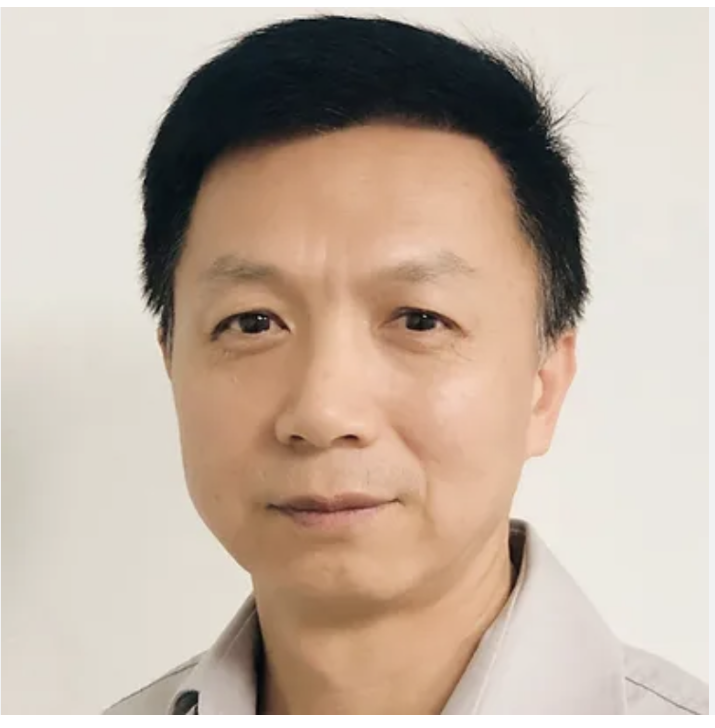
Dr. Feng Lin
Dr. Lin has a stellar track record of drug development in the area of immunology and immuno-oncology having worked with the public company Inovio Pharmaceuticals, where he developed technologies for gene delivery and therapeutic DNA vaccines against cancer and infectious diseases in both R&D and clinical settings. Subsequently, Dr. Lin served as Director of Chinese Operations for MediStem Inc, which was acquired by Intrexon in May 2014. It was the rapid clinical translation model developed by Dr. Lin at MediStem that resulted in the company’s accelerated FDA clearance to begin clinical trials, which resulted in the sale of the company.
Dr. Lin received his postdoctoral training at the Sanford-Burnham Medical Research Institute and his MD and Ph.D. at the Xiangya Medical School of Central South University, China. He has authored over 20 peer-reviewed scientific publications, including several in top journals such as Science, Cell, and Cancer Cell. He holds several patents.
Chief Scientific Officer

Advisory Board
Dr. Kesari is a board-certified neurologist and neuro-oncologist and is currently Chair, Department of Translational Neuro-Oncology and Neurotherapeutics, John Wayne Cancer Institute.
He is also Director of Neuro-Oncology, Providence Saint John’s Health Center and Member, Los Angeles Biomedical Research Institute. Dr. Kesari is ranked among the top 1% of neuro-oncologists and neurologists in the nation, according to Castle Connolly Medical Ltd and an internationally recognized scientist and clinician. He is a winner of an Innovation Award by the San Diego Business Journal. He is on the advisory board of American Brain Tumor Association, San Diego Brain Tumor Foundation, Chris Elliott Fund, Nicolas Conor Institute, Voices Against Brain Cancer, and Philippine Brain Tumor Alliance. He has been the author of over 250 scientific publications, reviews, or books. He is the inventor on several patents and patent applications, and founder and advisor to many cancer and neurosciences focused biotech startups.
Dr. Kesari has had a long-standing interest in cancer stem cells and studies their role in the formation of brain tumors and resistance to treatment. He believes that in order to cure patients with brain tumors we first need to gain a better molecular and biological understanding of the disease. A physician/scientist, Kesari harnesses his experience in surgery, chemotherapy, immunotherapy, radiation therapy and novel devices to help develop Precision Therapeutic Strategies that will advance medicine to a new stage in the battle against brain tumors and eradicate the disease.
Dr. Santosh Kesari

Allan Camaisa is the Former Chairman and CEO and cofounder of Calidi Biotherapeutics. He spent a decade leading the development of innovative stem cells delivering oncolytic virus to attack tumors.
He is current Board Director and Advisor to Calidi Bio.
Allan Camaisa

Dr. Ramesh Chigurupati is the President and Founder of Cure State Rx Home Infusion and Specialty Compounding. He has 31 years of pharmacy experience, including in the community , inpatient, and long term settings.
Dr. Chigurupati is a certified speciality pharmacist (CSP) and immunoglobulin Certified Pharmacist (IgNS) with comprehensive training in the following: sterile, non-sterile compounding, medication therapy management (MTM),immunizations, travel health and health evaluation.
Dr. Ramesh Chigurupati

Dr. Delgado is an expert in the biology of pregnancy and the abortion pill, being the founder of “Abortion Pill Reversal” and having been the first to publish in the peer-reviewed literature successful reversal of mifepristone administration using progesterone treatment.
Dr. Delgado received his undergraduate degree at St. Mary’s College of California where he graduated summa cum laude and received the biology department’s top honor — the Carlos Freitas Award. He attended medical school at UC Davis and completed his residency training at Santa Monica Hospital/UCLA. He has given numerous presentations to various groups on medical and bioethical topics.
Dr. George Delgado

Dr. Michael Koumjian
Dr. Michael P Koumjian is a Cardiac Surgery Specialist. He graduated with honors from Rutgers New Jersey Medical School in 1977 and has more than 46 years of diverse experiences, especially in CARDIAC SURGERY, THORACIC SURGERY, VASCULAR SURGERY.
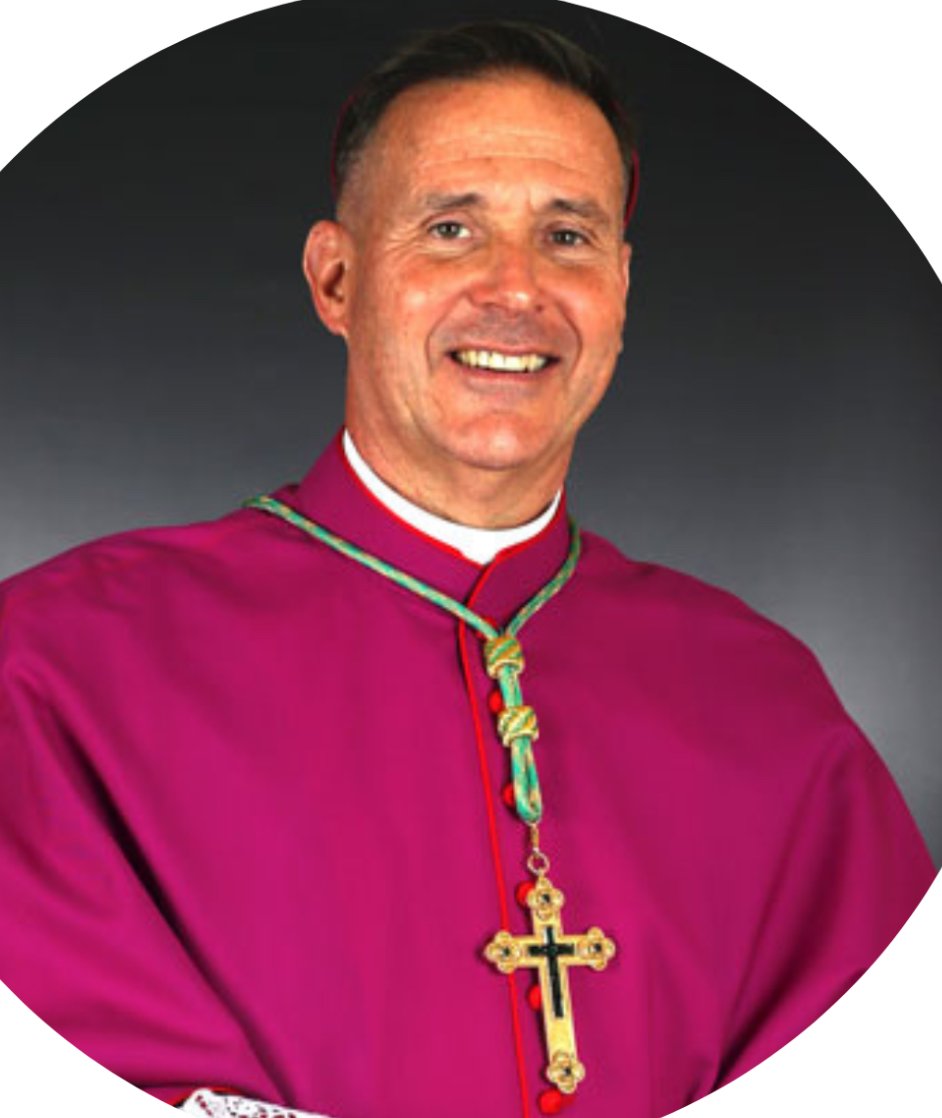
Bishop Joseph Coffey
Bishop Coffey graduated from La Salle University in 1982 with a double major in English/French. After college, Bishop Coffey worked as a grade school teacher, a ski instructor in Switzerland, and in the automobile industry in Germany and Belgium for five years.
He attended St. Charles Borromeo Seminary in Philadelphia, PA, and graduated with a Master of Divinity degree (MDiv) and was ordained in 1996 by Anthony Cardinal Bevilacqua. He earned a Master of Arts (MA) in Moral Theology, also from St. Charles Borromeo Seminary in 2000. While still in seminary, Father Coffey was given permission by Cardinal Bevilacqua to enter the U.S. Navy Chaplain Candidate Program in May of 1992 with the rank of Ensign. He stayed in the Navy Reserve for the next nine years. Following ordination in 1996, Bishop Coffey was assigned as an Associate Pastor to St. Katherine of Siena parish in Philadelphia, PA. After five years in parish ministry, he was given permission by Cardinal Bevilacqua for full-time active duty as a Navy Chaplain in September of 2001.
Bishop Coffey’s military awards include the Meritorious Service Medal, the Navy Commendation Medal with 2 gold stars, the Navy Achievement Medal with 2 gold stars, the Navy Sea Service Medal, the National Defense Medal, the War on Terrorism Expeditionary Medal, the War on Terrorism Service Medal, and the NATO Service Medal, 3 Battle E Ribbons.

Mark Skeels (Stanford B.A., University of San Diego J.D.) has 23 years of experience as a former prosecutor and civil attorney. Mark currently works with Gomez Trial Attorneys and handles cases nationwide in state and federal court. Mark previously served as Senior Chief Deputy City Attorney for the city of San Diego and Deputy District Attorney for the county of San Diego.
Mark also served as General Counsel for a professional baseball team, drawing on his experience as a former professional baseball player with the Florida Marlins. Mark handled all player procurement and negotiated contracts with vendors and municipal entities.
Mark proudly joined his alma mater as an adjunct professor at the University of San Diego School of Law, where he taught trial advocacy to students with the nationally-recognized mock trial team.
Mark Skeels

Davis Gammage is a technology executive and investor based in La Jolla, California. A graduate of UC Berkeley, he has worked in the defense and technology industries with such companies as General Dynamics, SAIC, and Qualcomm. He resides in La Jolla with his wife and three girls.
Davis Gammage
Keith has over 35 years’ experience in the Information Technology Industry. He is currently Chief Information Officer of GEM Team Inc. (www.gemteaminc.com), an IT Consulting and Staffing firm providing IT consulting services on a global basis with a focus on AI, Data Analytics, Cybersecurity, Application Development and Cloud Infrastructure
In 1995 Keith started IT consulting firm, GTC Systems Inc. where he was CEO and CIO and led many technical, marketing and business development teams for 22 years. GTC was acquired in 2017 by ePlus Technology Inc. where Keith spent 2.5 years providing IT consulting and executive advice to enterprise clients. After ePlus Keith also led IT consulting efforts with Speridian, a global technology integrator and big public companies such as Dynatrace and Splunk before taking the position of CIO at GEM Team Inc.
Keith also serves on multiple non-profit leadership teams and does volunteer work for youth groups, the homeless, pregnancy resource centers and refugees. He ministers to married couples, those planning on marriage and those suffering with depression.
Keith is a Deacon in the Chaldean Catholic Church. What Keith enjoys the most is playing with his grandchildren.